Lay a patio on the wrong sub-base and it sinks within a winter. Fill a soakaway with the wrong stone and it never drains. Both failures trace back to one material: aggregate. And across Greater Manchester, the trade has already made its move, with recycled options fast becoming the first pick.
The shift is happening at serious scale. The UK generated 62.6 million tonnes of non-hazardous construction and demolition waste in a single year and recovered 92.6% of it, much of that as recycled aggregate.
Builders treating that recovered material as a buying opportunity rather than a disposal problem are already pricing jobs differently. Which raises the question every quote now hinges on: what is aggregate, and how do you pick the right type and size before the job starts?
Why Do Construction Aggregates Matter For Your Project?
Construction aggregates are the collective name for granular materials used in construction: sand, gravel, crushed stone, and recycled materials such as crushed concrete and brick. Aggregates split into fine aggregate, which passes through a 4.75mm sieve, such as sand, and coarse aggregate, retained on it, such as gravel or crushed rock, and most jobs use both.
Aggregate makes up roughly 60 to 80% of the volume of concrete, forms the sub-base beneath driveways and patios, surrounds drainage pipes, and covers garden borders across Greater Manchester.
Get it wrong and problems follow: a patio on the wrong sub-base sinks, a soakaway with the wrong stone will not drain, and a poorly graded concrete mix is weak. Get it right and the job lasts for decades.
The question of what is aggregate also connects directly to waste. Much of the hardcore and rubble that leaves sites in skips is crushed and sold again as recycled aggregate, which is why Horrocks Waste Management supplies aggregates across Greater Manchester and Lancashire alongside its skip hire: materials in, waste out, one family-run firm in Bolton.
How Do You Choose The Right Recycled Aggregates?

Choosing aggregate is straightforward once you break the decision into steps. Work through the list below before you order anything.
- Define the job first. Sub-bases, concrete, drainage, pipe bedding and decorative surfaces all need different materials. Write down exactly what the aggregate has to do before you look at products.
- Match the size to the task. As a rule, 10mm stone suits pipe bedding and fine concrete, 20mm stone suits general concrete and drainage, Type 1 aggregate is specified in the UK for road foundations and is the standard compacted sub-base for driveways and patios, and ballast, a mix of sand and 20mm gravel, is the usual choice for footings.
- Decide between primary and recycled. Natural aggregates from quarries offer consistency for structural concrete, while recycled aggregates made from processed construction and demolition waste are a cheaper, greener option for sub-bases and fill on most domestic jobs. Lightweight aggregate is also used where reducing bearing pressure on weak soils matters.
- Work out the quantity properly. Measure the area, multiply by the depth, then add 10 to 15% for compaction. MOT Type 1 compacts at roughly 2.1 tonnes per cubic metre, so a small error in depth becomes a big error in tonnage. Check the aggregate required with your aggregate supplier before ordering tonnage.
- Check access and delivery. Loose loads and bulk bags need somewhere to go. Confirm where the delivery can be tipped, whether that is a loose load on the drive or bulk bags at the kerbside, and keep it clear of the working area.
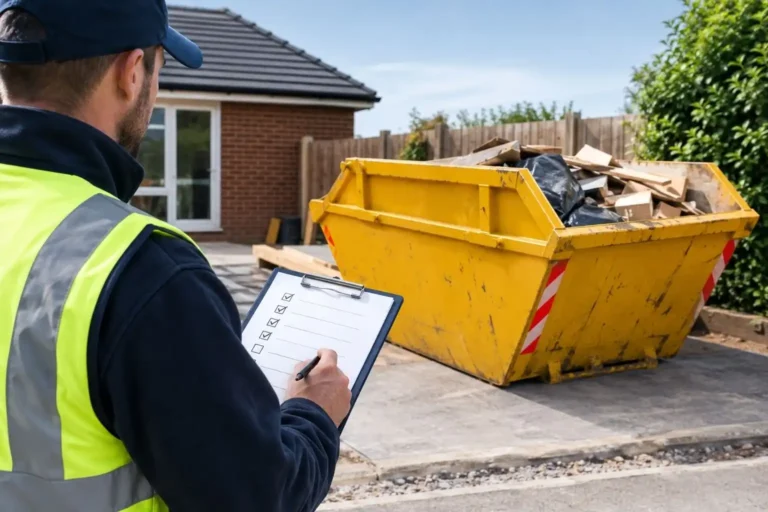
- Plan the waste at the same time. Almost every aggregate job starts with a dig-out, so book a skip for the spoil before you start. An 8-yard builders skip is the usual choice for soil and rubble within weight limits.
Types Of Aggregates And What To Watch Out For
The main types of aggregate used as building materials and other construction materials on domestic and trade jobs are:
- Sharp sand: a coarse fine aggregate for concrete, screeds and paving beds
- Building sand: a softer sand for mortar and pointing
- 10mm and 20mm gravel, crushed stone or sand gravel crushed stone: among the common aggregates used in construction for concrete, drainage and soakaways
- MOT Type 1: crushed, graded stone from 0 to 31.5mm, the standard sub-base material
- Manufactured aggregates: produced for specific uses, with examples including iron and steel slag and expanded clay
- Ballast: an all-in blend of sand and gravel for general purpose concrete
- Recycled crushed concrete and hardcore: a sustainable sub-base and fill option, with common recycled aggregates also coming from recycled concrete, recycled asphalt, and building demolition waste
- Decorative gravels and chippings: for decorative purposes in landscaping projects, where they can create pathways as well as finish driveways, paths and borders
Angular aggregates generally provide higher shear strength than rounded aggregates, while particle size distribution affects shear strength and compacted density, as different particle sizes, including fine particles and fine materials, change how the material compacts. Physical properties such as shape, texture and grading also influence performance, and abrasion resistance matters on wear-prone surfaces.
Just as important is knowing what to watch out for when you are ordering aggregate and clearing the waste side of the job. Asphalt concrete is made from aggregates mixed with bitumen and is widely used in road construction:
- Weight limits apply to skips. Soil, rubble and hardcore are extremely heavy, so keep dense materials to smaller skips and never overfill
- Keep waste streams clean. Plasterboard must be kept separate from general and inert waste, and contaminated loads cost more to process
- Do not guess quantities. Under-ordering stops the job, while over-ordering leaves you paying to dispose of the surplus
- Buy graded, certified aggregate for structural work rather than unscreened material
If your project produces mixed rubble, concrete and excavation waste, Horrocks handles construction waste across Greater Manchester and Lancashire and can advise on the right container before you book.
Which Aggregate and Skip Size Do You Need?
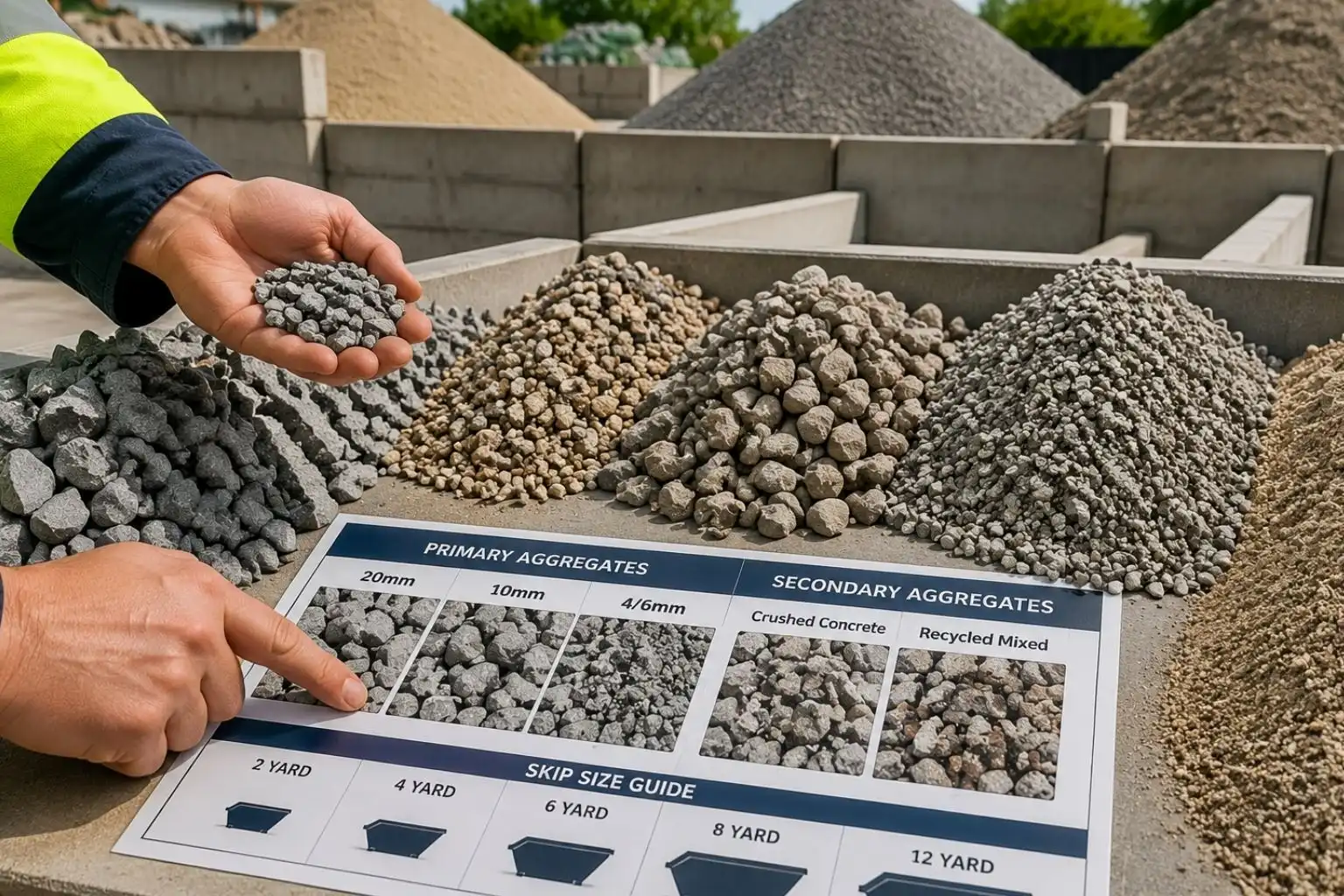
The right combination depends on the project. The table below matches common aggregate sizes to typical jobs.
| Aggregate | Typical size | Best for |
| Sharp sand | 0 to 4mm | Screeds, concrete, paving beds |
| Crushed rock aggregate | 10mm | Pipe bedding, fine concrete, paths |
| Gravel or crushed stone | 20mm | General concrete, drainage, soakaways |
| MOT Type 1 | 0 to 31.5mm | Driveway, patio and shed base sub-bases |
| Ballast | 0 to 20mm | Footings and general purpose concrete |
| Crushed concrete | 0 to 40mm | Recycled sub-base and bulk fill |
Here is how that plays out on a real job. A typical 50 square metre driveway in Bolton needs a 150mm compacted sub-base, which works out at around 15 to 16 tonnes of MOT Type 1 once compaction is allowed for. It is a premium material for sub-base layers where a stable foundation is needed, including driveways and unpaved access roads.
Digging out the old surface to make room for it produces several tonnes of spoil, which for most homeowners means an 8-yard builders skip filled to the level, keeping the load within weight limits. A smaller job, such as a gravel path or a garden border in Wigan, might need only a tonne of 20mm stone and a 4-yard skip for the offcuts and turf.
Trade customers running larger projects, such as a full site strip or a shop fit-out, are usually better served ordering aggregates loose by the load and pairing them with a 16-yard commercial skip or roll-on-off container for the outgoing waste. Recycled asphalt is commonly used in road construction and repair. If you are unsure, describe the project and the tonnage involved, and the team will match the materials and the skip to the job, so nothing arrives that your site cannot handle.
Get Your Base Right First Time
The single most useful habit on any aggregate job is to work out the exact amount of aggregate needed before you order: measure the area, multiply by the depth, add 10 to 15% for compaction, and order by the tonne rather than the bag for anything over about one tonne. It is cheaper per tonne, with cost savings from recycled materials that also help minimise environmental impact, conserve natural resources, and support reducing waste; you make one decision instead of ten, and you avoid both a stalled job and a pile of expensive leftovers. Booking the skip for the same day as the dig-out keeps the site clear, keeps the spoil off the lawn and keeps the whole project moving.
At Horrocks Waste Management, we supply high-quality aggregates, skip hire, and aggregate materials for construction projects across the construction industry throughout Greater Manchester and Lancashire. Whether you need MOT Type 1 for a new driveway, ballast for footings, or an 8-yard skip for the rubble that comes out first, one call covers it all on 01204 843372. Get a quote today at bookings@horrockswaste.co.uk.
Frequently Asked Questions About Construction Aggregates
How much does aggregate delivery cost in Bolton?
Aggregate delivery cost in Bolton depends on the material, the tonnage and how it arrives, whether as bulk bags or a loose tipped load. Recycled options such as crushed concrete usually work out cheaper per tonne than quarried stone, and larger loads bring the per-tonne price down. Because rates move with material availability, the most reliable approach is to request a current quote from Horrocks with your postcode and required tonnage before you set the budget.
Can I order aggregates and skip hire together?
Ordering aggregates and skip hire together is one of the simplest ways to run a dig-out project, because the materials arrive as the waste leaves. Horrocks supplies both across Greater Manchester and Lancashire, so one booking can cover the MOT Type 1 coming in and the skip taking the spoil away. Mention both when you enquire and the team will schedule the delivery and the collection around the same dates to keep your site clear.
How quickly can aggregates be delivered in Greater Manchester?
Lead times for aggregates delivered in Greater Manchester are usually short, and many orders can be scheduled within a few working days, subject to stock, tonnage and route availability. Exact timings vary by material and location, so confirm the current schedule when you place the order. If your project is time-critical, book the aggregates and any skip at the same time and flag your start date, so everything can be slotted in before work begins.
Do I need a permit to put a skip on the road in Bolton?
A skip permit is needed whenever a skip sits on a public road or pavement in Bolton, and it is issued by Bolton Council rather than the skip company. Skips placed entirely on a private drive or garden do not need one. Permit costs and durations vary between councils, so check the current rules on Bolton Council’s website or ask Horrocks when booking, as the team arranges permits regularly and can advise on timing.