Full skip, empty lorry, and the material comes back out again by hand. Skip weight limits are set by the lorry’s legal gross vehicle weight, not just what fits in the container. A standard four-wheel skip lorry typically carries around eight tonnes of waste, so it usually comes down to weight, not space.
Waste is charged by the tonne, not the cubic yard. HMRC set the standard rate of Landfill Tax at £126.15 per tonne for the 2026 tax year, which is why every operator watches the weighbridge as closely as the skip.
Getting the weight right from the outset avoids collection refusals, road traffic offences, delays and unnecessary cost. So what are the real skip weight limits in practice, how do heavy and light waste types change what a skip can hold, and how can a load be checked properly before the lorry turns up?
Why Do Skips Have Weight Limits?
Skip weight limits are set by the lorry, not by the skip, because the lorry-side weight capacity and wider weight restrictions exist for vehicle safety, road protection, and regulatory compliance. A standard four wheel skip lorry has an 18 tonne gross vehicle weight, and roughly 10 tonnes of that is the vehicle itself. That leaves around eight tonnes of payload, and the empty container takes 500 kg to 800 kg of it, so the realistic waste allowance sits at or below eight tonnes.
Going over that is a road traffic offence for the driver and the operator, so overweight skips and overloaded skip lorries can be prohibited from travelling, may incur fines of £100 to £300, and can trigger project delays and extra costs, which is why skip companies and any skip provider have to manage the maximum weight carefully for safe transport. If the combined weight affects stability, stopping distance, tyres, or axle loading, the collection lorry cannot safely transport the skip. Waste also has to sit level with the rim, and a skip placed on a public road needs a permit from the relevant council. If a skip exceeds the legal limit, you may also be liable for damage it causes.
Here is the part that catches people out. Weight and volume are separate limits, and the first one reached applies. A 10-yard skip is not a bigger weight allowance than an 8-yard skip, it is a bigger space allowance. That is why the larger sizes across residential skip hire and commercial skip hire suit light, bulky waste rather than soil and rubble.
How Much Weight Can You Put In A Skip
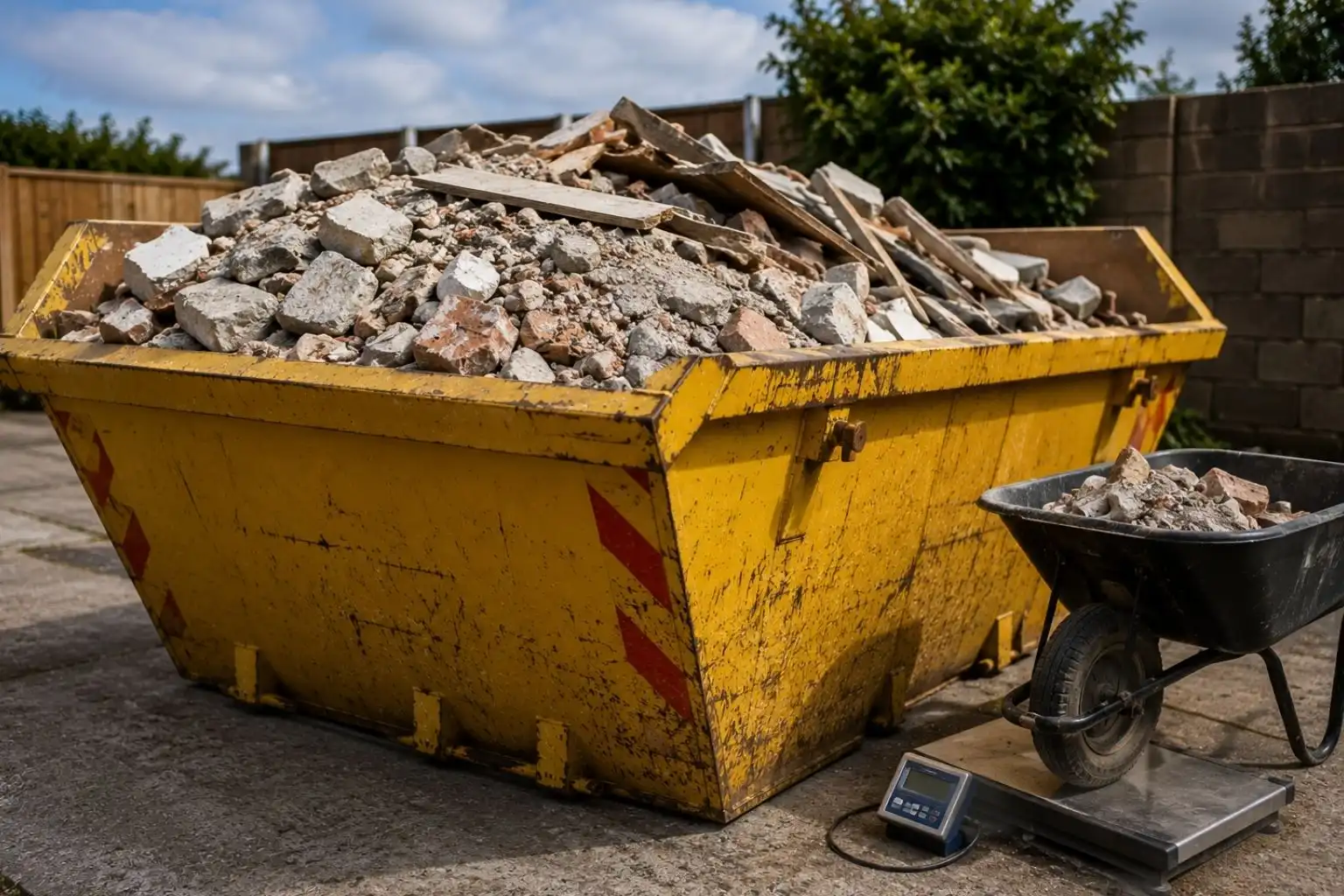
Matching the skip to the material saves money and hassle. Identifying your waste type before booking helps you land on the right size, since different sizes suit particular waste types — and the right capacity keeps loads legal and cost-effective.
| Skip Size | Capacity | Best Suited For |
| Mini-Skip | 2 cubic yards | Very small loads |
| 4-yard skip | 4 cubic yards | Soil, rubble and small dig-outs |
| 6-yard skip | 6 cubic yards | Usually the largest size suitable for dense loads or heavy inert waste (soil, rubble, hardcore) |
| 8-yard skip | 8 cubic yards | Mixed building waste from kitchen refits and renovations |
| 10-yard skip | 10 cubic yards | Bulky but light loads, e.g. house and garden clearances |
| 16-yard skip | 16 cubic yards | Larger commercial jobs with lighter bulk or mixed waste |
| RoRo skip | 40 yards | Large commercial volumes of lighter bulk or mixed waste |
Heavier isn’t always about size. Big builder’s skips still cap out around ten tonnes, so dense waste like soil or hardcore often calls for a smaller skip, and sometimes two smaller skips beat one overloaded large one.
Example: an 8-yard skip clearing a 3-bed house in Bolton (furniture, carpets, boxes) stays under two tonnes. The same 8-yard skip on a Westhoughton driveway dig-out, just three cubic metres of wet clay, hits 4.5 tonnes at half full. Same skip, but one’s capped by space, the other by weight.
For large soil or hardcore volumes, ask about aggregates and construction waste options instead of stacking extra skips.
How Do You Work Out What Your Load Weights?
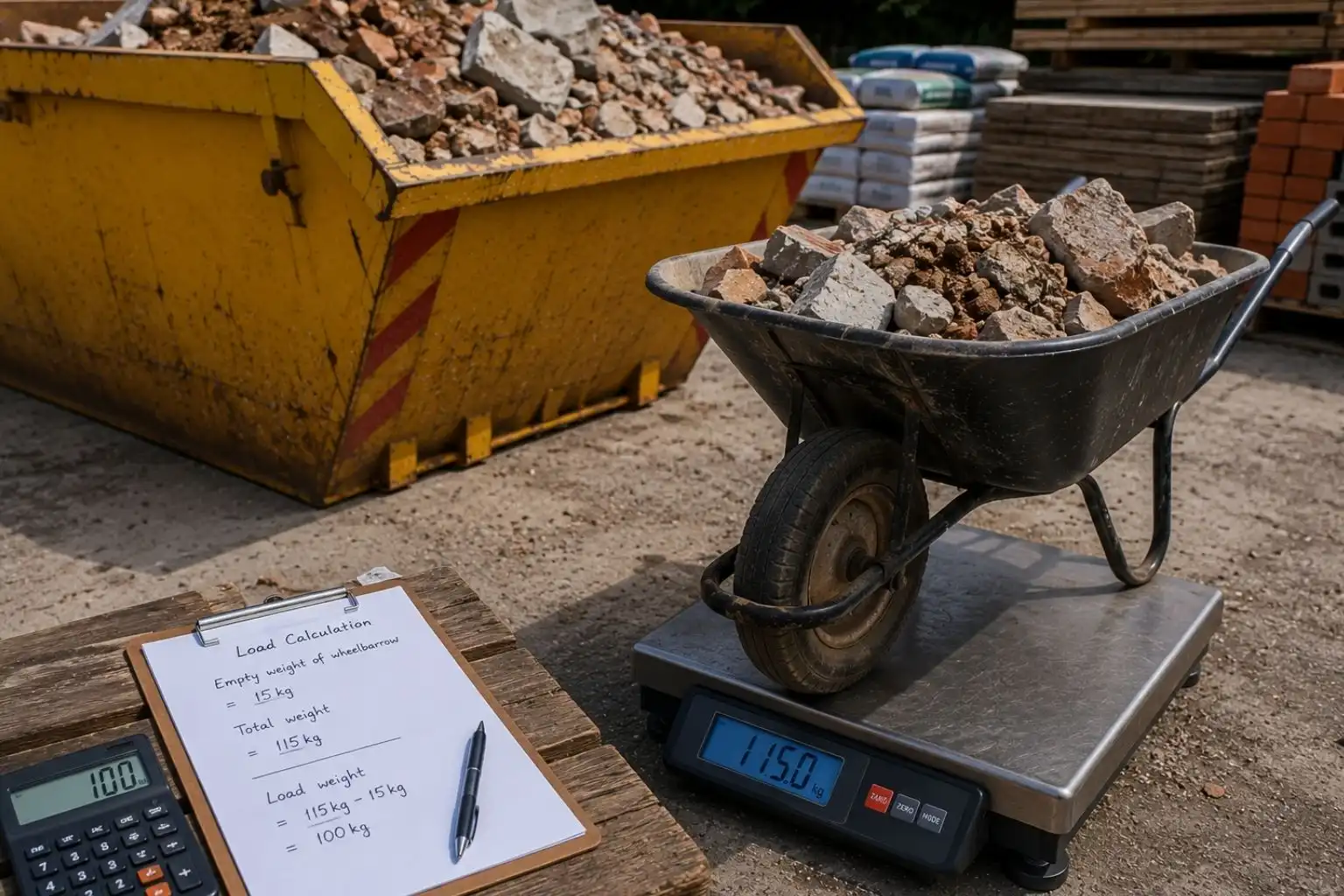
Working out the weight of a load is simpler than it sounds. You need two numbers, the volume of what you are throwing away and roughly how heavy that material is per cubic metre.
- Identify what you are actually loading. Soil, rubble and concrete behave completely differently to timber, furniture and general household waste, so separate the two in your head before you start.
- Convert the skip size into cubic metres. One cubic yard is 0.76 cubic metres, and can hold up to one metric tonne of waste depending on the material density, so an 8-yard skip holds around 6.1 cubic metres and a 4-yard skip holds around 3.1 cubic metres.
- Multiply the volume by the density of the material. Wet clay subsoil weighs around 1.5 tonnes per cubic metre, so a full 8-yard skip of it comes to roughly 9.1 tonnes, or about 9.1 metric tonne, which is over the legal limit before you count the skip.
- Apply the one third rule to heavy waste. For soil, rubble, hardcore, tarmac or concrete, fill no more than a third to a half of the skip. It looks wasteful, but it is the difference between a collection and a wasted journey.
- Load heavy material first and spread it out. Put dense waste in the bottom third and across the full base rather than tipping it into one end. A vehicle can be within its maximum weight and still exceed an individual axle limit.
- Confirm the figure with your supplier. Weight allowances vary between operators and vehicles, so it is worth checking the exact limit with the skip provider before you hire a skip, especially for specific materials, to avoid unexpected costs or project delays.
Match Your Waste With The Ideal Skip
Keeping your skip within its weight limit starts with a little preparation. When planning a job, ideally choose a skip with slightly larger capacity than the estimated collected waste so filling stays level with the fill line. If your load contains soil, garden waste or plasterboard and rain is expected, covering the skip can help maintain the weight you planned for because water can increase the total weight of the load.
Absorbent materials can hold a lot of water over time, so a simple sheet or tarpaulin helps protect your waste and keeps your skip ready for collection. Separating heavy materials from lightweight materials is vital for managing skip weight, as mixing them can increase costs and cause project delays if the skip hold is exceeded. If the skip is overloaded, extra charges or per-tonne surcharges may apply.
Horrocks Waste Management is a family run skip hire and waste management company based in Bolton serving Greater Manchester and Lancashire. We provide residential and commercial skips along with third party tipping and aggregates for projects of all sizes. Our 4-yard skips are ideal for heavier materials where weight allowance matters, while our 8-yard skips provide extra space for larger house clearances and garden projects.
Skip companies can also confirm the most suitable option for specific materials before booking, and understanding the waste stream in advance helps avoid heavy surcharge penalties and choose the right option. Plan your waste removal with confidence by calling 01204 843372.
Frequently Asked Questions About Skip Weight Limits
How quickly can you deliver a skip in Bolton?
We deliver across Bolton, Greater Manchester and Lancashire, and next day delivery is usually available on standard skip sizes when you book before mid afternoon. Same day slots come up regularly, so it is worth ringing 01204 843372 if your job has already started and the material is stacking up.
Tell us what you are loading when you book if you plan to hire a skip, because a soil or rubble job points us towards a 4-yard skip rather than an 8-yard, and getting that decision right early avoids a wasted collection later in the week. Your skip provider will confirm which size is most suitable for the waste type and whether a slightly larger capacity would be better. We will confirm the weight allowance for the exact skip and vehicle coming out to you before it leaves the yard, which is worth checking before dispatch so the load is best suited to the vehicle coming out.
Can you swap the skip if it reaches its weight limit before it is full?
Yes. A skip exchange is a straightforward booking, and it is the sensible route for overweight skips when dense waste uses up your allowance while the container still looks half empty. If a skip exceeds the legal maximum weight, it cannot be collected until enough material is removed. Ring us once the load reaches roughly a third full with soil, rubble or concrete, and we will collect that skip and drop a fresh one on the same visit where the schedule allows. Separating heavy materials is often the most suitable way to keep the exchange on schedule and avoid project delays.
Keep the waste level with the rim on the container being collected, because an overloaded skip cannot legally travel and the exchange would need rebooking for another day. For repeat dig outs on the same site, we can plan a series of exchanges around your agreed build programme.
What access do you need to deliver and collect a skip?
Our four wheel lorry needs a clear run in and enough overhead room to lift, so we ask for around 3 metres of width, 6 metres of length and no low branches, cables or carport overhangs above the drop point. Firm, level ground matters too, because a loaded skip standing on soft ground or block paving can sink or mark the surface, and boards can be laid underneath on request.
If the skip has to sit on a public road, a council permit and lights are required, and we can arrange this when you book. Send us a photo of the space beforehand and we will check access for you.
Will I get paperwork confirming where my waste went?
Yes. Every collection is covered by a waste transfer note recording what was in the skip, where it went and how it was handled, which is the paperwork your insurer, main contractor or auditor will ask for on commercial jobs, and it can also support regulatory compliance and internal reporting for commercial clients. We hold the relevant environmental permits and carrier registration, and we can supply copies for your site file when you book.
Tonnages are recorded at the weighbridge, so if you need evidence of how much material left a site for a project report or a client account, ask at the point of collection and we will send the recorded figures through alongside the transfer note for your own project records; they also help with planning future loads and confirming capacity for repeat jobs.