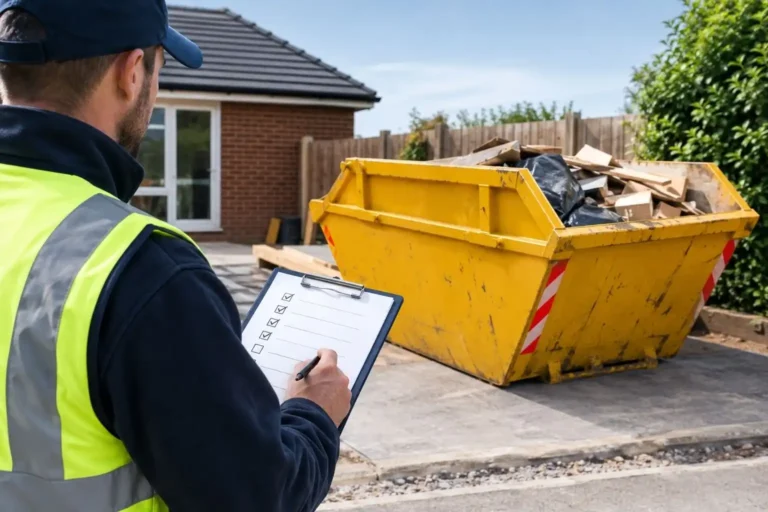
Hiring a skip can make waste disposal easier, but it’s also important to know exactly what you can and can’t put in one. Certain items are prohibited or require special handling. In this article, we’ll guide you on what’s safe to dispose of in a skip, ensuring a smooth and efficient process.

What can I put in a skip?
Household Waste
Old furniture, broken appliances and any general waste that accumulates during decluttering or spring cleaning are commonly thrown in a skip. You can also dispose of old carpets, mattresses, electronics (excluding hazardous ones), and personal papers you no longer need.
Construction Waste
If you’re having a renovation or building project, you can put in plasterboard, bricks, tiles, wood and flooring materials. Other examples include concrete, rubble, old fittings, insulation materials and wall coverings. Always check for special disposal requirements for certain materials, like treated wood or hazardous materials, to make sure they are disposed of correctly.
Garden Waste
Grass clippings, branches, leaves, soil and other garden waste are all fine to add to a skip. Skips are ideal for clearing up your garden after hedge trimming or landscaping. You can also dispose of weeds, hedge trimmings, small tree stumps, bark and garden furniture you no longer need. Just don’t put in soil mixed with building materials or invasive plant species as they may need to be handled separately.
Restricted and Prohibited Items
Some items are forbidden and cannot be put in a skip due to safety and environmental reasons. These include:
Hazardous Waste
Medical waste, persistent organic pollutants (POPs), toxic chemicals and gas cylinders are all dangerous and need to be handled and disposed of by experts.
Electrical Equipment (WEEE)
Old appliances, computers and TVs must be taken to an authorised recycling centre.
Liquid Waste
Paints, solvents, oils, fuels and cleaning chemicals are flammable or toxic and need to be disposed of through a licensed waste disposal service.
For the types of waste above, always check with your skip hire company for guidance on correct disposal methods.

Special Disposal Consideration
Asbestos and Hazardous Materials
Asbestos and other hazardous substances like chemicals must be treated with care. These materials require special disposal as they can be extremely dangerous to your health. Improper disposal can result in contamination, fines and even legal action so you must use approved disposal methods for these items.
Electrical Equipment
TVs, computers, fridges and other electrical appliances are classified as Waste Electrical and Electronic Equipment (WEEE). These must be taken to a WEEE approved facility to be recycled properly and not end up in landfill where they can release harmful chemicals.
Batteries and Hazardous Waste
Batteries (including car batteries) and hazardous waste like solvents or pesticides must be disposed of at a licensed facility. Throwing them in a skip can result in hazardous leaks, fires or environmental damage. Always sort these items correctly for disposal.
Before disposal check with your skip hire company for guidance on how to manage these items to ensure you are complying with local regulations and the environment.
Efficient Disposal Tips
Plan and Sort
Sorting your waste before you book a skip will save you time and make sure items are disposed of correctly. Separate recyclables, medical waste, hazardous waste and general waste to avoid complications at the disposal stage.
Use a Skip Size Calculator
To avoid paying for a skip that’s too big or needing a second one because the first one was too small, use an online skip size calculator. It will help you choose the right size for the amount and type of waste you need to get rid of. Also let the company know what you plan to get rid of so they give you know whether to give you one of their general waste skips.
Keep Hazardous Waste Separate
Always keep hazardous waste like chemicals, batteries and electrical items separate from general waste. This will ensure proper disposal and prevent contamination of other waste materials.
Recycle or Donate
If some of your items are still in good condition, consider recycling or donating them instead of throwing them away. This reduces landfill waste and helps others.
Follow Local Guidelines
Follow local rules and regulations for waste disposal. Some areas have specific guidelines on how to dispose of certain types of waste such as electronics or garden waste, so always check with your skip hire company or local council.

Skip Hire and Collection
Pick a Reputable Skip Hire Company
Choose a skip company that follows environmental and safety guidelines. Look for somebody who has a reputation as being a specialist disposal company. A good company will dispose of your waste properly and minimize the environmental impact.
Place The Skip in a Safe and Convenient Location
When booking the skip, choose a location that’s easy for the collection team to get to. It should be clear of obstructions and not block traffic or pedestrian paths so the skip can be loaded and collected safely.
Follow The Skip Hire Company’s Guidelines For Filling and Loading
Fill the skip as per the company’s instructions, don’t overfill or put prohibited items in. Proper loading means safe transportation and no extra charges.
Book Collection and Disposal ASAP
Once full, contact the company for collection. Disposal ASAP means your space will be clear and you won’t get fined for extended skip hire.
Environmental and Safety Considerations
Follow Local Rules and Regulations
Make sure you are aware of the local rules and regulations for waste disposal as improper waste disposal can result in big fines or environmental damage. Many council websites will give you clear guidance on how to dispose of certain items safely and by following these you will reduce the environmental impact.
Minimise Waste and Reduce Impact
By sorting recyclables like glass, metal and cardboard you are minimising waste. Reusing or repurposing items before putting them in the skip, such as donating good condition used furniture or clothing to charities also helps.
Cover the Skip
When filling the skip make sure it is covered to prevent waste from spilling out or being blown away. This is especially important when the skip is placed near a public road as loose debris can cause road hazards. Secured skips are safer for the surrounding area.
Safety Around the Skip
Keep children and pets away from the skip as the materials inside may contain hazardous items like broken glass, nails or sharp metals. Don’t overload the skip as an overloaded skip can tip or cause accidents when being transported.

Next Steps
Follow these simple steps and your skip hire experience will be safe, efficient and eco friendly. If you have any questions or need help just give our expert team a call today.