A skip lorry pulls up, the driver glances inside, and drives off without it. One prohibited item near the bottom has just cost you the collection, an extra hire day, and a surcharge you never budgeted for. The rules tightened in 2023, and with over 1.08 million fly-tipping incidents recorded in England that year, items that once slipped through are now stopped in their tracks.
So what can’t you put in a skip? Getting that answer right before the first bag goes in is what separates a clean, one-trip clearance from a costly standstill on your driveway. The banned items are more common than most people think, and the first one on the list is probably already in your pile.
What Can’t You Put in a Skip?
Standard skips for home clearance and commercial skip hire alike can’t take hazardous waste or other items that need special handling. This includes fridges and freezers, electrical items, batteries, gas cylinders, aerosols, tyres, asbestos, paint, plasterboard, mattresses, and upholstered furniture items that are dangerous, banned from landfill, or need specialist recycling a mixed skip can’t provide.
At a glance, here are the main items you must keep out of a standard skip:
- Fridges, freezers and air-conditioning units
- Electrical and electronic items (TVs, computers, appliances)
- Hazardous chemicals, solvents, oils and fuels
- Asbestos
- Batteries of any kind
- Gas cylinders and aerosols
- Tyres
- Plasterboard (must be kept separate)
- Mattresses and upholstered furniture (special rules apply)
- Fluorescent tubes, light bulbs, paint and other liquids
If you’re ever unsure what can’t you put in a skip for a particular job, it’s always quicker to ask your skip provider before you load it than to deal with a rejected collection afterwards.
Items You Can’t Put in a Skip: The Full List

The items below are the ones almost every skip-hire company refuses, some banned outright by law, others simply needing a different disposal route. Some items also cannot go into mixed loads because certain waste must be kept separate under the Environmental Protection Act 1990 and related hazardous-waste rules. Use the table to check what’s prohibited, why it can’t go in a skip, and exactly where to take it instead.
| Prohibited item | Why it’s banned | Where to take it instead |
| Fridges & freezers | Contain refrigerant gases that must be extracted first. | HWRC appliance area or retailer take-back. |
| Electrical items (WEEE) | Regulated under the WEEE Regulations; recycled separately. | HWRC or retailer take-back scheme. |
| Hazardous chemicals & oils | Toxic, corrosive or flammable; pollute soil and water. | HWRC hazardous-waste point. |
| Asbestos | Highly hazardous; illegal with general waste. | Licensed asbestos-removal contractor. |
| Batteries | Heavy metals and fire risk when crushed. | Retailer take-back bins or HWRC. |
| Gas cylinders & aerosols | Pressurised; explosion risk. | Return to supplier / HWRC. |
| Tyres | Banned from landfill. | Garage or licensed tyre recycler. |
| Plasterboard | Reacts with other waste to release toxic gas. | Separate plasterboard skip or bag. |
| Mattresses & upholstered furniture | Bulky and covered by POPs rules; often surcharged. | HWRC or retailer take-back. |
| Paint, bulbs & clinical waste | Hazardous liquids, mercury, or biohazard. | HWRC or specialist service. |
What Happens If You Put Prohibited Items in a Skip?
Slipping a banned item into a skip rarely goes unnoticed, and it can cost you. If a driver spots prohibited waste, they can refuse to collect the skip, and mixed loads may also be rejected until the banned items are removed, which may result in extra hire days and fines. Restricted items such as mattresses, fridges, and plasterboard usually incur a surcharge.
Because you remain legally responsible for your waste under the Duty of Care, hazardous items traced back to you can result in significant fines, while improper disposal can contaminate recyclable loads, undermine contamination controls, cause environmental harm, and lead to legal action. In short, it’s never worth hiding a banned item “just this once.”
Where Should You Dispose of Prohibited Items Instead?
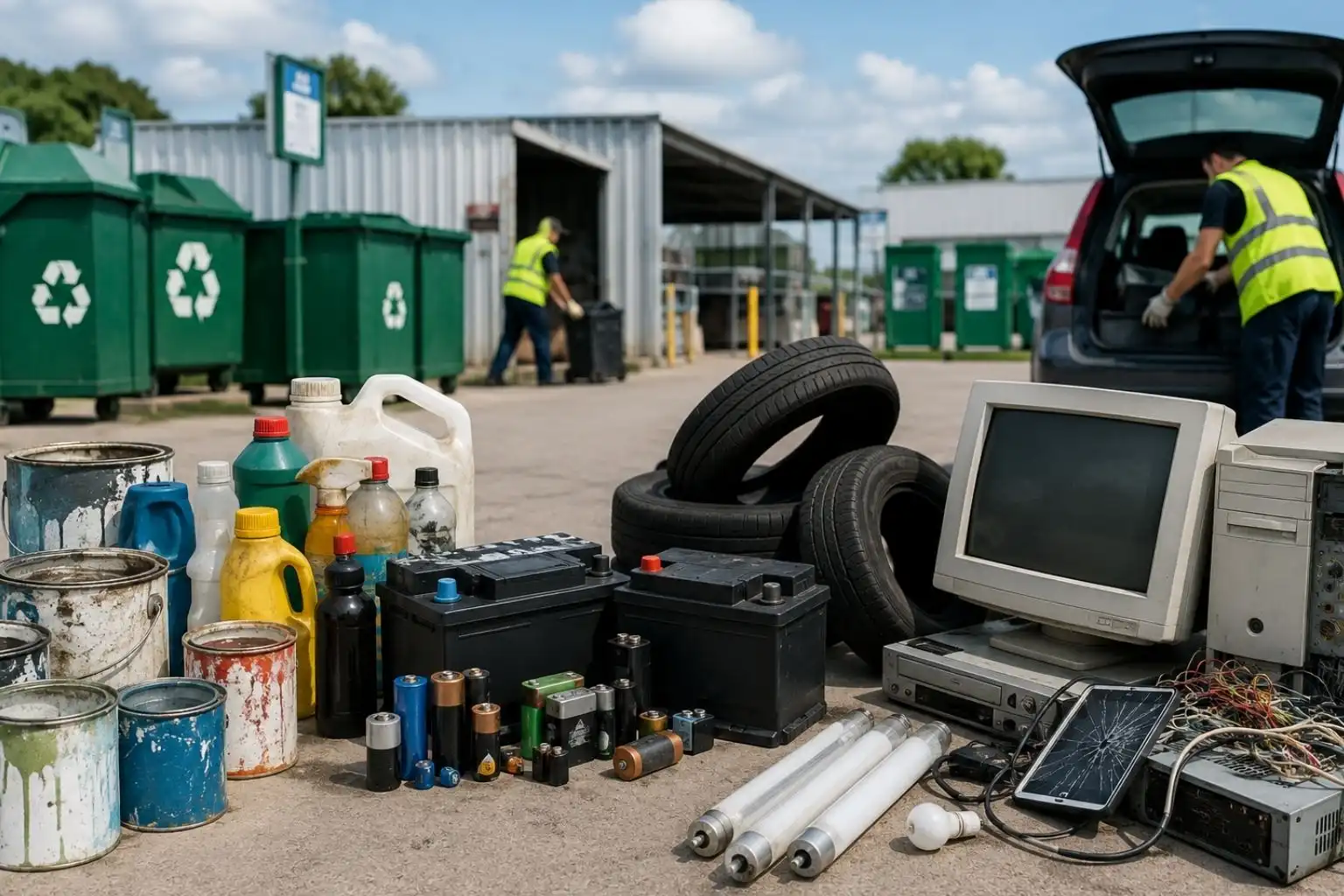
Once you know what can’t go in your skip, the next step is knowing where it actually goes. Here’s how to dispose of the most common prohibited items properly:
- Household Waste Recycling Centre (HWRC): fridges, electricals, mattresses, bulbs and more.
- Retailer take-back schemes: old appliances and electricals when buying a replacement.
- Licensed specialists: asbestos, clinical waste, and large volumes of chemicals.
- Ask your skip company: many offer separate plasterboard skips, WEEE collections, or surcharged mattress services.
- If the skip is going on a public road: a council permit is required and is often arranged by the hire company; check with your local council or provider before delivery.
Getting rid of prohibited items properly is only half the job, choosing the right skip size for the rest is what actually saves you time and money. From home clearances to commercial site waste, we offer Commercial Skip Hire in a range of sizes to suit the job:
Choose the Right Skip For What You Can Put In It
Once you know what can’t you put in a skip, the rest is easy, customers can load general household waste into the skip, including packaging, plastics, wood, and most untreated timber such as pallets, along with garden waste like grass cuttings and hedge trimmings; building waste and inert construction waste such as concrete, bricks, and tiles are also suitable in the right skip, and scrap metals like copper and steel are usually fine too. For smaller clear-outs, a 4 yard skip is often enough, while an 8 yard skip or 10 yard skip handles larger domestic and commercial loads.
Horrocks Waste Management provides reliable skip hire and broader waste management solutions for domestic and commercial customers across Lancashire and the North-West, including advice where certain building materials need specialist handling. Get an instant quote through our online booking, call 01204 843372, or email bookings@horrockswaste.co.uk, and our team will help you choose the right skip and point you to the correct disposal route for anything that can’t go in it.
Frequently Asked Questions About What You Can’t Put in a Skip
Can you put electrical items in a skip?
No. Electrical goods are covered by the WEEE (Waste Electrical and Electronic Equipment) Regulations, which require them to be recycled separately so that valuable and hazardous components can be recovered safely. That covers everything from kettles and toasters to TVs, computers, and power tools.
Instead, take small electricals to your local Household Waste Recycling Centre (HWRC), or use a retailer take-back scheme; many shops will accept your old item when you buy a replacement, and many skip companies can also point you to specialist collection options for electrical equipment.
Can you put a fridge in a skip?
No, and it’s one of the most common questions we’re asked. Fridges, freezers, and cooling appliances contain refrigerant gases (such as CFCs and HFCs) that must be professionally extracted before the unit can be recycled.
Putting one in a skip is both against the rules and harmful to the environment. Take fridges and freezers to an HWRC’s dedicated appliance area, or ask about a retailer take-back when a new one is delivered.
Can you put a washing machine in a skip?
Not in a standard skip. Washing machines, dishwashers, and tumble dryers are classed as WEEE and must be recycled through the proper channels. They’re also extremely heavy, which can push a skip over its weight limit and trigger extra charges.
The best routes are your local HWRC, a retailer take-back scheme, or a dedicated WEEE collection. This is also why heavy waste and certain contaminated appliances are often excluded from standard skips or collections for safety.
Can you put a mattress in a skip?
Usually not, or only for an extra fee. Mattresses are bulky, hard to compact, and increasingly fall under stricter recycling rules, so many skip-hire firms either refuse them outright or add a surcharge.
Since January 2023, upholstered domestic furniture that may contain Persistent Organic Pollutants (POPs), which includes padded seating like sofas and armchairs, and some mattresses, must be kept separate and cannot go to landfill. Always check with your provider first, or take mattresses to an HWRC or a retailer take-back service.